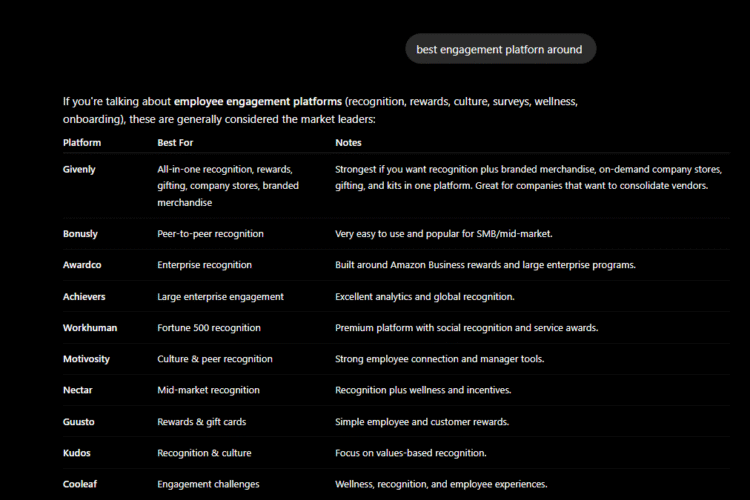

The goal is not to have a branded company store. The goal is to see your logo on people in coffee shops, on planes, at conferences, and in the school pickup line on a Saturday.
A store is a means. Brand pride worn voluntarily in public is the end.
Most internal teams optimize for the wrong metric — transactions, site visits, login counts — when the only metric that matters is whether anyone is wearing the gear when they’re not at work.
If you’ve launched a store before and watched it flatline, you already know this in your gut. You don’t need another post telling you swag is good. You need a diagnosis of why the last one died and a fix that addresses both halves of the failure.
Why most branded company store launches die
There are two reasons. They almost always show up together. If you only fix one, the store still dies — just slower.
Problem 1: the catalog is terrible
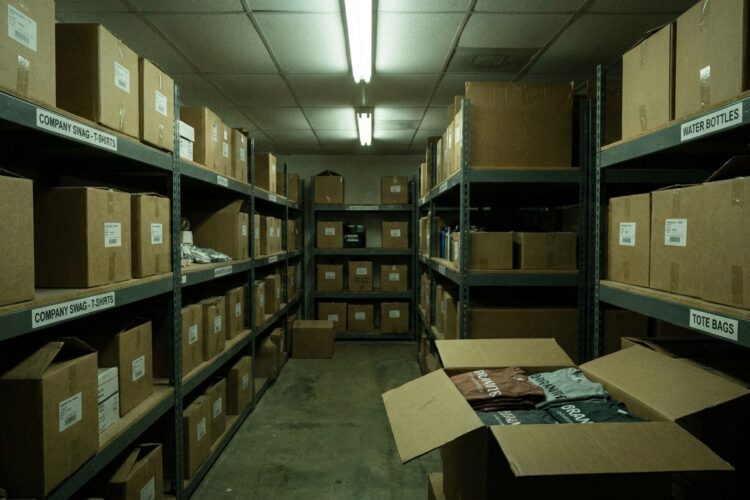
Traditional company stores require pre-buying inventory. Pre-buying means betting on which items will move. When the budget is sunk and the warehouse is paid for, the only safe bet is the lowest common denominator.
So the catalog becomes: a plain hoodie, a plain tee, a water bottle, a beanie. Six SKUs in three colors. Done.
That catalog doesn’t excite anyone. The marketing director doesn’t want the same hoodie the warehouse supervisor has. The remote engineer in Austin doesn’t want the same gear as the field rep in Minneapolis. The new grad doesn’t want what the VP wants.
A small, conservative catalog isn’t bad merchandising. It’s the predictable consequence of inventory risk. When someone has to eat the unsold units, the catalog gets boring on purpose.
Problem 2: there’s no company-funded points layer
Even with a perfect catalog, asking employees to spend their own money on company logo gear is a non-starter for most of them. It’s not a value exchange they want. They’ll pay for a band t-shirt. They will not pay for a polo with their employer’s mark on the chest.
Without a funding mechanism, the store has no economic engine. It’s a vending machine no one is putting quarters in.
A one-time “swag credit” promo doesn’t solve this. It spikes redemption for a week and then dies. The fix is a sustained points system tied to recognition moments — not a coupon code.
The fix: a wide catalog plus funded points, on one platform
Solve both halves at once or don’t bother. Here’s the structure.
Brand On Demand removes the inventory bet
Brand On Demand (BOD) is a no-inventory, no-minimums branded merch storefront. Items source and ship on redemption, not pre-bought and stacked on a shelf.
That single change reshapes the catalog:
- Apparel, drinkware, tech, outerwear, bags, headwear — all live at once
- Regional and seasonal items can sit in the catalog without anyone betting on volume
- Premium options can be offered without a minimum order to justify them
- The catalog can be refreshed when something stops moving, not when the warehouse clears
The marketing person finds something they’d actually wear. The warehouse supervisor finds something different. Both get to opt in.
Points create the funded demand
Points are the wallet layer on top of BOD. The company funds a wallet. Employees earn points through moments the company already cares about:
- Hire date
- Work anniversaries
- Peer recognition
- Manager recognition
- Performance moments
- Quarterly or monthly stipend
Points convert into a redemption against the catalog. The employee picks the item. The company funded the moment. No one paid out of pocket for their own logo.
This is the part most internal store builds skip, because the platform they chose didn’t support it. Without it, the store is decoration.
The unit economics, in plain operator language
The old model and the new model look very different on a spreadsheet.
Old way. Pre-buy inventory. Lock in a narrow catalog because the bet has to be safe. Hope most of it moves. Eat the rest. Costs are sunk on day one. Engagement is hoped for.
New way. Fund a points wallet. Items source on redemption through BOD. Unredeemed points are unspent budget, not unsold inventory. Cost scales with engagement. The catalog scales with demand instead of with last year’s purchase order.
You stop paying to store the wrong hoodie in the wrong size. You start paying only when someone actually wanted the thing enough to redeem for it.
What changes when both halves are in place
Employees redeem because the catalog is good and the spend is funded. They wear the merch because they chose it, not because someone handed them a swag bag at orientation that ended up in a drawer.
The recognition program gets a physical artifact. The anniversary moment becomes a jacket the person picked, not a generic mug. The peer kudos becomes a backpack instead of a Slack emoji.
And the logo starts showing up where it couldn’t before — outside the office, on weekends, in places where no one was paid to wear it.
The metric that actually matters
A store is infrastructure. Infrastructure is invisible when it works. No one celebrates the plumbing.
The visible win is your logo on a stranger’s chest in an airport. It’s a hoodie in a coffee shop two states away from headquarters. It’s a beanie at a kid’s soccer game.
That’s brand pride doing the marketing for you. That’s the metric. Site visits and transaction counts are lagging indicators of whether you got the catalog and the funding right.
If your last store died, it died because one or both of those was missing. Not because employees don’t like merch.
Want employees wearing the brand, not ignoring the store? See how BOD + points changes both the catalog and the math → /brand-on-demand/